

Differences Between Photovoltaic Panel-End Connectors and Line-End Connectors
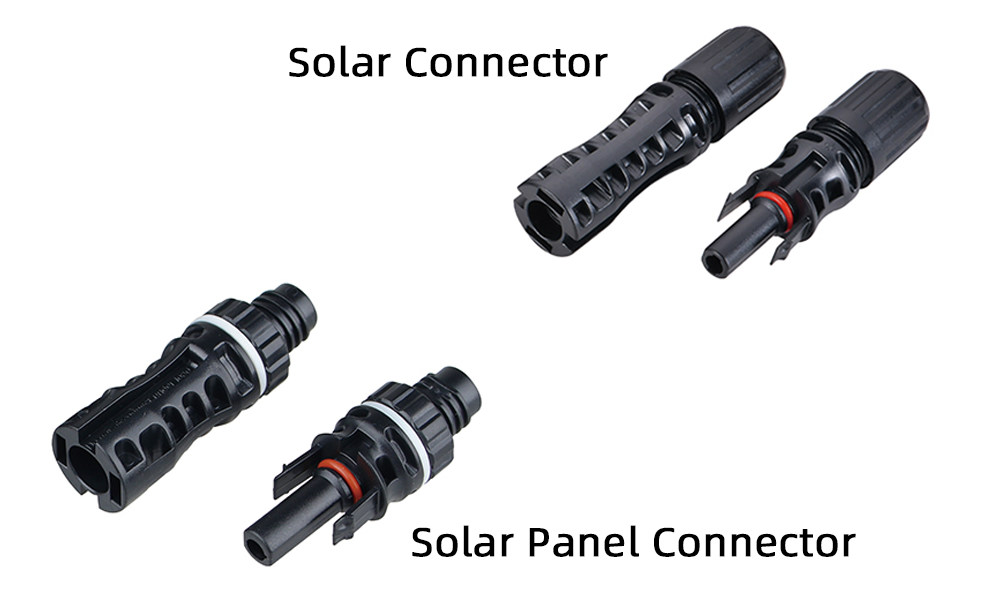
Photovoltaic connectors are the "lifeline" of a photovoltaic (PV) power generation system, running throughout the entire project. They are crucial for ensuring the stable transmission of generated power from the modules to the inverter and the user end. In PV systems, connectors can be mainly divided into two categories based on their application scenarios: line-end connectors (e.g., module-end) and panel-end connectors (e.g., inverter-end). So, what are the differences between photovoltaic panel-end connectors and line-end connectors? This article will provide a detailed analysis from multiple dimensions, including definition, installation location, function, and design features.
I. Different Definitions and Installation Locations
Photovoltaic panel-end connectors (also known as onboard connectors) are typically installed on the panel of photovoltaic equipment, such as the housing of inverters, combiner boxes, and controllers. They are fixed connection interfaces on the equipment panel, and when plugged into a line-end connector, electrical signals can be output and transmitted.
Photovoltaic line-end connectors, on the other hand, are installed at the end of cables and are used to connect the photovoltaic modules to the cables of other parts of the system. They are typically connected to the lead-out cables of the photovoltaic panel and are responsible for transmitting the direct current generated by the photovoltaic panel to other parts of the system. The MC4 connector that people often refer to is usually a wire-end connector.
II. Different Functional Roles
In photovoltaic systems, panel connectors and wire connectors play different functional roles:
The main functions of panel connectors are:
- Transmitting the DC power generated by the photovoltaic panels to other parts of the system, such as inverters, battery packs, or the power grid.
- Providing mechanical fixation to ensure a stable connection between the equipment and the support structure.
- The onboard connector is installed with the inverter (or controller) and must also ensure the inverter's sealing function.
The functions of wire connectors include:
- Connecting the photovoltaic panels to the inverter or other electrical equipment to ensure stable power transmission.
- Connecting multiple solar panels in series or parallel to form a complete photovoltaic system.
- Responsible for series and parallel connections between photovoltaic panels, as well as mating connections with panel connectors.
III. Different Design and Technical Characteristics
Due to differences in installation location and usage scenarios, the two types of connectors also differ in design and performance requirements:
Design characteristics of panel connectors:
- Typically have waterproof and dustproof protective properties to protect the connector and circuitry from external environmental influences.
- Higher requirements for waterproofing processes and factory processing precision are needed.
- In complex installation and harsh transportation environments, they are more prone to breakage due to impacts, therefore, reinforced materials are often used in the design.
- They are usually connected via a plug-in method for easy installation and maintenance.
Design characteristics of wire-end connectors:
- They typically have high-temperature resistance and corrosion resistance to ensure stable and reliable connections.
- They usually require welding or crimping to ensure a secure connection.
- They consist of two main parts: a metal component and an insulating component.
- Installation relies more heavily on the operating procedures and tool usage of on-site construction personnel.
IV. Selection and Usage Considerations
In the design, installation, and maintenance of photovoltaic systems, the correct selection and use of board-end and wire-end connectors is crucial.
Selection Considerations:
- Ensure the connector's rated voltage and current match the photovoltaic system to avoid overload damage.
- Select connectors that comply with international standards (such as IEC 62852).
- Pay attention to cable specification matching. Using cables with diameters exceeding the specified range will result in poor joint sealing and reduced protection levels.
- For panel-end connectors, prioritize products using reinforced materials to cope with complex installation and transportation environments.
Installation and Maintenance:
- Photovoltaic connectors must be able to withstand harsh environments and possess waterproof, high-temperature resistance, and UV resistance properties.
- Low contact resistance is a crucial consideration; inferior connectors can have power losses more than 30 times that of high-quality connectors.
- Power must be disconnected during connector installation or removal; never plug or unplug while the power is on.
- Use professional crimping tools for on-site installation to avoid increased contact resistance, overheating, or even fire risks due to improper crimping.
Summary
Although photovoltaic panel-end connectors and wire-end connectors belong to the same photovoltaic connector family, they differ significantly in definition, installation location, functional role, and design characteristics. Panel connectors are mounted on the equipment panel, providing electrical connection and sealing protection at the equipment end; wire connectors are installed at the cable end, responsible for the wiring connections between photovoltaic panels and between photovoltaic panels and equipment. Together, they form the complete electrical connection chain of the photovoltaic system.
It is worth mentioning that color can also help distinguish them—the connector bodies at the photovoltaic panel end and the wire end are typically gray. In practical engineering applications, correctly identifying and selecting these two types of connectors is fundamental to ensuring the safe, efficient, and long-term stable operation of the photovoltaic system.
 telephone
 Contact US