

Customer Conducts On-Site Resistance Test on MC4 Photovoltaic Connectors to Verify Connection Stability
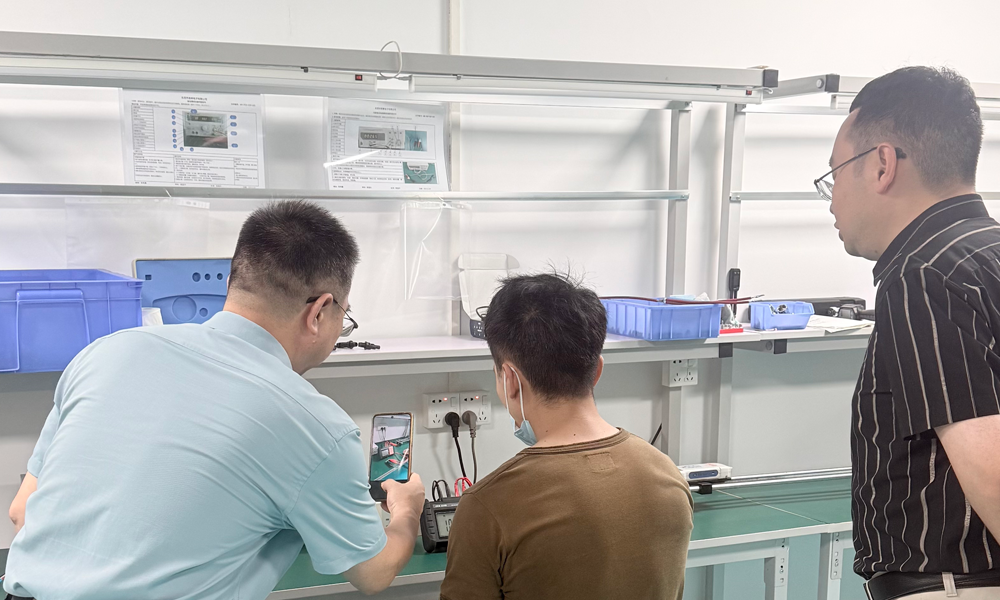
In photovoltaic systems, the MC4 photovoltaic connector, though small in size, plays a crucial role in current transmission and system connection. The stability of the connector's contact performance directly affects the operating efficiency, safety, and long-term reliability of the photovoltaic system.
Recently, the customer conducted on-site resistance testing on MC4 photovoltaic connectors to further verify the connector's conductivity stability and connection reliability during application. For photovoltaic projects, this type of testing is not only part of product quality verification but also a crucial step in mitigating future operational risks.
I. What is MC4 Photovoltaic Connector Resistance Testing?
MC4 photovoltaic connector resistance testing primarily involves detecting the contact resistance of the connector's conductive parts to determine whether the connector maintains good conductivity under mating, crimping, and energized conditions.
In photovoltaic systems, connectors need to continuously carry DC current. If the internal terminal contacts are unstable, the crimping is weak, the material's conductivity is insufficient, or the male and female ends are not properly mated, the contact resistance may increase.
The core purpose of resistance testing is to determine whether the product has the ability to stably transmit current by detecting the resistance performance of the connector's connection points. A more stable resistance indicates greater reliability in the connector's conductivity, contact, and structural fit.
Generally, resistance testing helps customers focus on the following aspects:
Stable conductivity of the connector terminals; Reliable contact after mating of the male and female terminals; Risk of loose connections at crimp points; Potential for abnormal heating at connection points; Suitability of the product for long-term photovoltaic system applications.
II. Importance of Resistance Testing
- Impact on Photovoltaic System Power Generation Efficiency
The MC4 connector is a crucial DC-side connection component in a photovoltaic system. Excessive contact resistance can lead to additional current losses during transmission, affecting the overall power generation efficiency of the system. Resistance testing provides a more direct assessment of whether the connector exhibits stable, low-loss conductivity.
- Reduced Risk of Abnormal Heating
High contact resistance can easily cause temperature rises at connection points, potentially leading to connector housing deformation, burning, arcing, or even system failure. Resistance testing helps identify potential problems early, reducing safety risks during later operation.
- Verifying Terminal and Structural Stability
High-quality MC4 connectors require not only suitable shell materials but also stable terminal structures, good mating accuracy, and reliable crimping. Resistance testing verifies the consistency of the connector's structural design and manufacturing from a conductivity perspective.
- Enhancing Customer Confidence
For EPC projects, photovoltaic distributors, installers, and OEM customers, connectors are not simply accessories but crucial components affecting the long-term operation of the system. On-site resistance testing allows customers to intuitively understand product performance, strengthening their trust in product quality and supplier capabilities.
- Facilitating Later Maintenance and Risk Prevention
During the long-term operation of photovoltaic power plants, connectors may be affected by high temperatures, rain, ultraviolet radiation, wind, sand, and the installation environment. By testing the resistance of the connection points, maintenance personnel can determine whether the connection status is normal, promptly detect problems such as loosening, oxidation, and poor connections, and reduce later maintenance costs.
Conclusion
The resistance test of MC4 photovoltaic connectors, seemingly just a testing step, actually reflects the product's conductivity, structural stability, and long-term operational reliability. For photovoltaic systems, stable connections are essential to ensure stable power generation.
Maylar Electronics consistently prioritizes product quality and practical application performance. From material selection and terminal structure to production assembly and factory testing, we continuously control connector quality to provide customers with safer, more stable, and more reliable photovoltaic connection solutions.
Meylar Electronics, connecting every ray of sunshine.
四、市场、标准与选用建议
全球光伏连接器市场由少数国际知名品牌(如史陶比尔、安费诺、泰连等)和众多国内合规制造商共同构成。选择时务必警惕低价劣质产品,它们往往是系统故障和安全的重大隐患。
选用核心原则:
认证齐全:务必选择通过TÜV、UL、IEC 62852等国际权威认证的产品。这些认证是对其安全、性能和耐久性的最基本保障。
品牌与质量:优先考虑信誉良好的品牌,确保材料与工艺的可靠性。
正确匹配:同一光伏系统内,尤其是同一串组件中,应使用同一品牌、同一型号的连接器,严禁混用。不同品牌产品尺寸、公差、弹性材料可能不同,混用易导致接触电阻激增、过热、密封失效甚至烧毁。
专业压接:连接器与电缆的连接必须使用专业压接工具,确保压接牢固、电阻低,这是保证长期可靠性的关键施工环节。
五、未来趋势
随着光伏技术发展,连接器也在不断演进:
更高电压电流:适配1500V及以上系统大功率组件,承载更高电流。
更智能:集成微型传感器,实现对其温度、电阻等状态的在线监测,预警潜在故障,迈向“智能连接”。
材料革新:研发更耐候、更环保的新型材料。
结语
光伏连接器,虽不是光伏系统中价值最高的部分,却是连接所有核心部件、保障能量血脉畅通无阻的“生命线”。它的品质与安装质量,直接关系到电站的发电收益、运营安全和长期稳定性。在构建光伏系统时,给予这个“小部件”以“大关注”,选择可靠的产品并进行规范的安装,是从源头守护光伏资产安全与高效运营的明智之举。
 telephone
 Contact US