

Why do customers travel 300 kilometers to conduct on-site inspections? Unveiling the core value of the MC4 photovoltaic connector tensile test.
Why do customers travel 300 kilometers to conduct on-site inspections? Unveiling the core value of the MC4 photovoltaic connector tensile test.
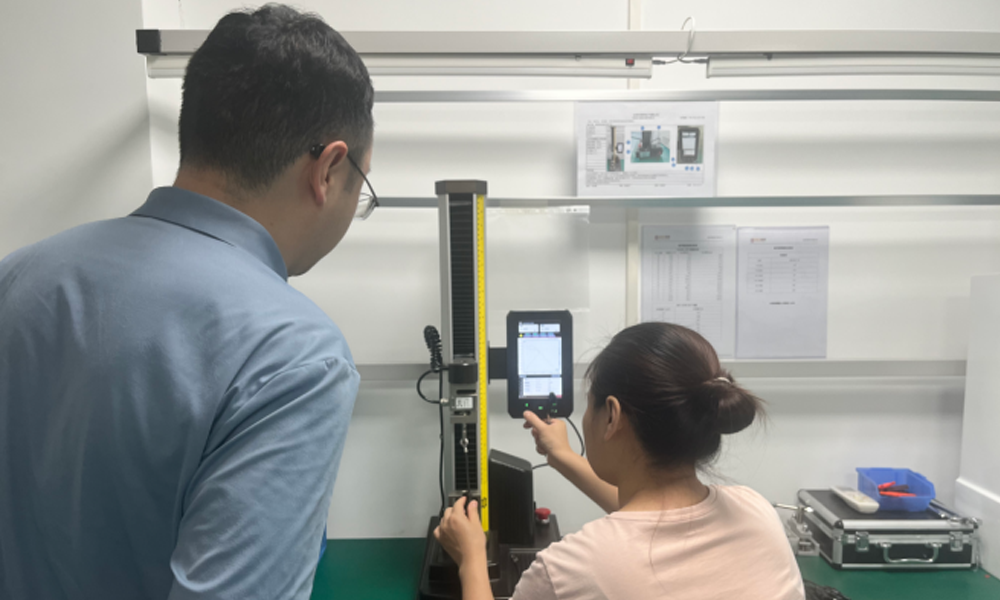
Today, we welcomed an exceptionally persistent customer. To observe the entire pull-out force testing process of MC4 photovoltaic connectors firsthand, the customer traveled 300 kilometers from Meizhou to visit our factory. This journey of hundreds of kilometers highlights a crucial yet often overlooked core testing step in photovoltaic component production – the MC4 photovoltaic connector pull-out force test.
Through in-depth communication with the customer, we learned that they have long sourced MC4 photovoltaic connectors from the Jiangsu and Zhejiang regions. In previous collaborations, no supplier had ever mentioned the connector pull-out force testing, and the customer themselves were unaware of its necessity. Recently, however, their end customers have frequently reported product problems, with the core faults concentrated on the MC4 photovoltaic connector hardware terminals detaching or loosening under tension. This directly leads to poor contact in the photovoltaic modules, unstable power generation, and even equipment malfunctions, placing the customer under significant pressure from numerous complaints and after-sales issues. To thoroughly address product pain points, the customer proactively conducted online research and learning, understanding the definition, testing standards, and practical applications of tensile testing. After comparing multiple manufacturers, they made a special trip to our factory to verify our tensile testing process and product quality, aiming to fundamentally prevent potential connector tensile failures. This dedicated on-site visit also made us realize that many photovoltaic industry professionals lack sufficient understanding of connector tensile testing. Below, we will break down the core content and key significance of photovoltaic wiring harness tensile testing in detail.
I. What is the MC4 photovoltaic connector tensile test?
The MC4 photovoltaic connector tensile test, also known as the pull-out force test, is an essential physical performance test item before the MC4 photovoltaic connector leaves the factory. It mainly focuses on static tensile testing of key locations such as the crimping parts of the photovoltaic connector and wiring harness, the hardware terminals, and the locking structure. It is a key testing method to verify the connector's assembly firmness and structural stability.
The test process is completed using a professional tensile testing machine. Workers fix the photovoltaic wiring harness and MC4 connector on the testing equipment fixture and apply a uniform longitudinal tensile force according to industry standards, recording the stress limits and deformation states of the connector terminals, wiring harness, and locking mechanism in real time. Simply put, it simulates various external force scenarios encountered during the long-term use of a photovoltaic power station, such as wiring harness pulling, wind swaying, equipment vibration, and maintenance contact, to test whether the product can withstand normal forces and avoid problems such as detachment, loosening, breakage, or wire breakage.
This test mainly targets the crimping assembly of photovoltaic DC harnesses and MC4 male and female connectors. The core testing dimensions include two aspects: first, the crimping pull force between the harness and the hardware terminals to test whether the copper wire and the terminal crimping is firm and to prevent wire detachment; second, the locking pull force of the male and female connectors to verify the tensile strength of the locking structure after the connector is mated and locked, and to prevent the mating joint from loosening.
II. The Importance of Tensile Testing
During the long-term operation of photovoltaic (PV) power plants, MC4 connectors, as core connection components between PV modules and inverters, are constantly exposed to the complex outdoor environment and subjected to various external forces. Tensile testing, seemingly a basic physical inspection, is a crucial safeguard for ensuring the stable operation of PV systems and reducing after-sales failures, its importance manifesting in three core dimensions:
1. Preventing Terminal Detachment and Ensuring Power Generation Stability
This was also the core issue encountered by the Meizhou customer. Connectors that have not undergone tensile testing are highly susceptible to loose crimping between the metal terminals and the wiring harness. During long-term operation of the power plant, slight wind swaying, wiring harness displacement due to thermal expansion and contraction, and minor pulling during routine maintenance can all cause terminals to gradually loosen and detach from the wiring harness, directly leading to circuit breaks, module power outages, and interrupted PV module power generation, affecting the overall power plant's efficiency. Products that have passed standard tensile testing can strictly control the crimping firmness, preventing terminal detachment problems at the source and ensuring continuous and stable power generation of the PV system. 2. Mitigating Safety Hazards and Reducing O&M Risks
Loose or detached photovoltaic connectors not only affect power generation but also pose significant safety hazards. Poor circuit contact can generate arcs and localized overheating. Prolonged high-temperature operation can easily burn out connectors and wiring harness insulation, potentially leading to short circuits, fires, and other safety accidents, threatening the safety of the photovoltaic power station equipment and site. Furthermore, frequent loosening failures significantly increase the frequency of power station maintenance, consuming substantial manpower, material resources, and financial resources. Tensile testing can screen out structurally unstable products and those failing to meet tensile strength standards, preventing substandard products from entering the market and significantly reducing power station safety hazards and O&M costs.
3. Standardized Quality Control, Enhancing Product Reputation and Competitiveness
The photovoltaic industry is currently experiencing increasingly fierce competition, making the stability and durability of components a core competitive advantage. Many traditional procurement models only focus on the appearance, conductivity, and waterproof rating of connectors, neglecting tensile performance testing. This leads to the accumulation of hidden product defects, ultimately resulting in end-user complaints. Incorporating tensile testing into routine quality control processes enables comprehensive quality control of products, ensuring the structural stability of each batch of connectors. This helps buyers completely eliminate end-user complaints, build a strong market reputation, and enhance the core competitiveness of their products.
In short, the seemingly insignificant MC4 photovoltaic connector plays a crucial role in ensuring the connectivity of photovoltaic system circuits. Tensile testing is not an unnecessary inspection process, but a core procedure for identifying inferior products, ensuring product quality, and safeguarding power plant safety. It is precisely this rigorous quality control that attracts numerous customers to travel hundreds of kilometers to verify our Dongguan Meihua production and testing processes, using stringent quality control to safeguard the value of our customers' products.
 telephone
 Contact US