
Why did we choose PPO (PPE) instead of domestically produced PC as the main plastic material for photovoltaic connectors?
Why did we choose PPO (PPE) instead of domestically produced PC as the main plastic material for photovoltaic connectors?
As a core component for transmitting electrical energy in photovoltaic systems, photovoltaic connectors need to be exposed to complex outdoor environments for extended periods and must meet standards for maintenance-free operation and long lifespan (typically over 25 years). Therefore, the comprehensive performance requirements for their plastic materials are extremely stringent. Next, we will analyze in detail why PPO (also known as PPE) is chosen as the primary plastic material for photovoltaic connectors, considering material characteristics, cost comparisons, and market irregularities.
Ⅰ,The core characteristics of PPO (PPE) material perfectly match the requirements of MC4 photovoltaic connectors.
PPO (polyphenylene oxide), also known as PPE (polyphenylene ether), is one of the world's five major general-purpose engineering plastics. Its comprehensive performance is naturally suited to the outdoor use of photovoltaic connectors, possessing the following three core essential elements, which are also the core reasons for our selection:
(1) Excellent cold and high temperature resistance: It can stably adapt to outdoor ambient temperatures ranging from -40℃ to +80℃, and its product deformation temperature range can reach -40℃ to 125℃, far exceeding the daily operating temperature range of photovoltaic systems. Compared to ordinary plastics, PPO has a glass transition temperature as high as 211℃ and a brittleness temperature as low as -170℃. Even under extreme high-temperature exposure or low-temperature freezing environments, it can still maintain structural stability and will not experience softening or cracking, ensuring long-term reliable operation of the connector.
(2) Strong UV resistance: Modified PPO material can effectively resist long-term outdoor ultraviolet radiation, avoiding material aging, yellowing, and cracking, fundamentally extending the service life of the connector. Photovoltaic connectors are exposed to sunlight for extended periods. Insufficient UV resistance can lead to rapid aging and damage, resulting in poor circuit contact, leakage, and other safety hazards. PPO's weather resistance effectively mitigates this problem.
(3) High Flame Retardant Rating (V0): PPO possesses excellent self-extinguishing properties, with a limiting oxygen index of 29-35%. Adding only a small amount of flame retardant is sufficient to achieve the UL94 V0 flame retardant standard. It self-extinguishes quickly upon contact with fire, preventing the formation of large amounts of molten droplets and effectively preventing the spread of fire, thus ensuring the safe operation of photovoltaic power stations. Photovoltaic systems are high-voltage electrical equipment, and flame retardancy is a mandatory requirement for plastic materials; otherwise, serious safety accidents such as melting and fire are highly likely.
Furthermore, PPO exhibits excellent electrical insulation and dimensional stability, with a dielectric constant between 2.6 and 2.8, almost unaffected by temperature and humidity, effectively preventing current leakage. Its extremely low water absorption rate ensures its performance does not degrade in humid environments, further adapting it to outdoor use scenarios with frequent rain and high humidity, fully meeting the stringent requirements of photovoltaic connectors.
Ⅱ, other materials that can meet the requirements are too expensive and not cost-effective.
Currently, some materials do meet the performance requirements of photovoltaic connectors, such as PC9330 and BASF PA66. These materials can also be used in the production of MC4 photovoltaic connectors. However, the core issue is their excessively high price, making large-scale, cost-effective production difficult.
Due to rising raw material prices, the current price of PC9330 and BASF PA66 is approximately 58-65 RMB/KG, significantly higher than PPO raw materials. This increase in raw material costs directly leads to a substantial increase in connector production costs. MC4 photovoltaic connectors produced using these materials typically cost 5-8 RMB/set, far exceeding the price of products using PPO materials, which is detrimental to controlling the overall construction cost of photovoltaic power plants.
III. Analysis of Market Low-Price Disorder: Low Cost ≠ Quality, Prominent Hidden Dangers
Discerning customers may notice numerous low-priced photovoltaic connectors on the market, priced as low as 1 yuan per unit, or even as low as 0.9 yuan per set. These products mostly claim to use "PC+PA" materials, but their prices are far below normal levels. The core reason for this is the use of counterfeit materials and shoddy workmanship.
These low-priced products do not use imported PC9330 and BASF PA66, but rather low-cost domestic ordinary PC and PA raw materials. More importantly, to further reduce costs, up to 80% of sprue (i.e., recycled plastic waste) is added during the production process. According to industry standards, the proportion of sprue should not exceed 25%; excessive addition will lead to a significant degradation in the performance of the plastic material.
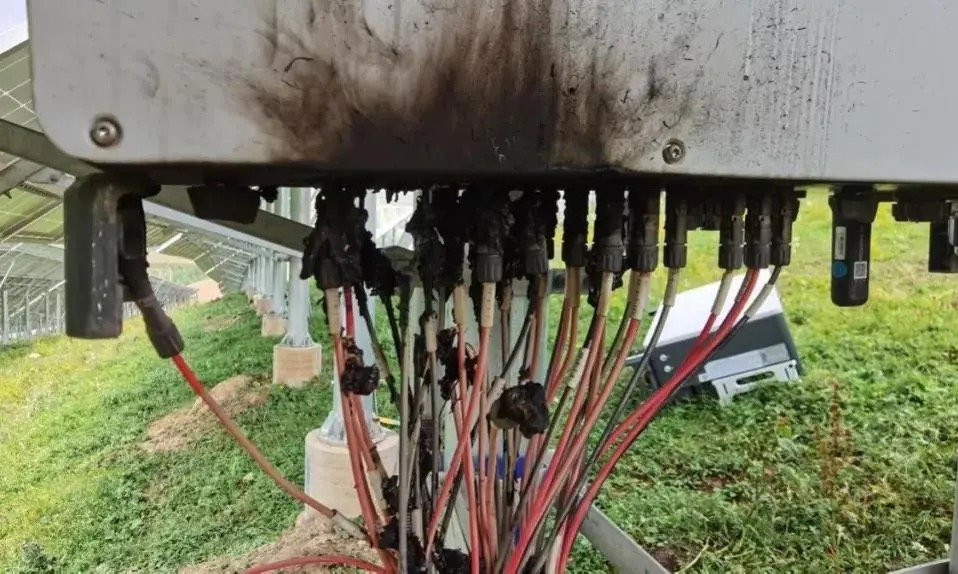
Adding a large amount of sprue material will completely destroy the material's core properties such as cold and high temperature resistance, UV resistance, and V0 flame retardancy. After long-term use, it is very easy to cause problems such as shell cracking, deformation, and accelerated aging. This will not only lead to poor connector contact and increased power transmission loss, but may also cause safety accidents such as short circuits and fires, posing a fatal hidden danger to the normal operation and maintenance of photovoltaic power stations. The subsequent repair and replacement costs will be far higher than the initial purchase cost savings.
IV. Conclusion: PPO is the best choice for high-performance photovoltaic connectors at a competitive price.
In summary, PPO (PPE) material is the optimal choice for photovoltaic connectors, with its core advantages lying in its "performance meets standards + outstanding cost-effectiveness": On the one hand, it fully meets all the core requirements for long-term outdoor installation of photovoltaic connectors, including cold and high temperature resistance, UV resistance, V0 flame retardancy, and high insulation, adapting to various complex outdoor environments and ensuring the long-term stable operation of photovoltaic systems; on the other hand, its price is more affordable compared to high-end materials such as PC9330 and BASF PA66, effectively controlling connector production costs and achieving a balance between product performance and price.
In the current photovoltaic connector market, where material confusion and rampant low-price competition are prevalent, PPO, as a plastic material specifically adapted for photovoltaic connectors, offers stable performance, high cost-effectiveness, and is easier for customers to identify and remember. Choosing photovoltaic connectors made of PPO material is not only a guarantee of product quality but also a responsible commitment to the long-term safe operation and maintenance of photovoltaic power plants.
 telephone
 Contact US