

Meihua Photovoltaic Connectors: How to Choose Excellent Terminals?
Meihua Photovoltaic Connectors: How to Choose Excellent Terminals?
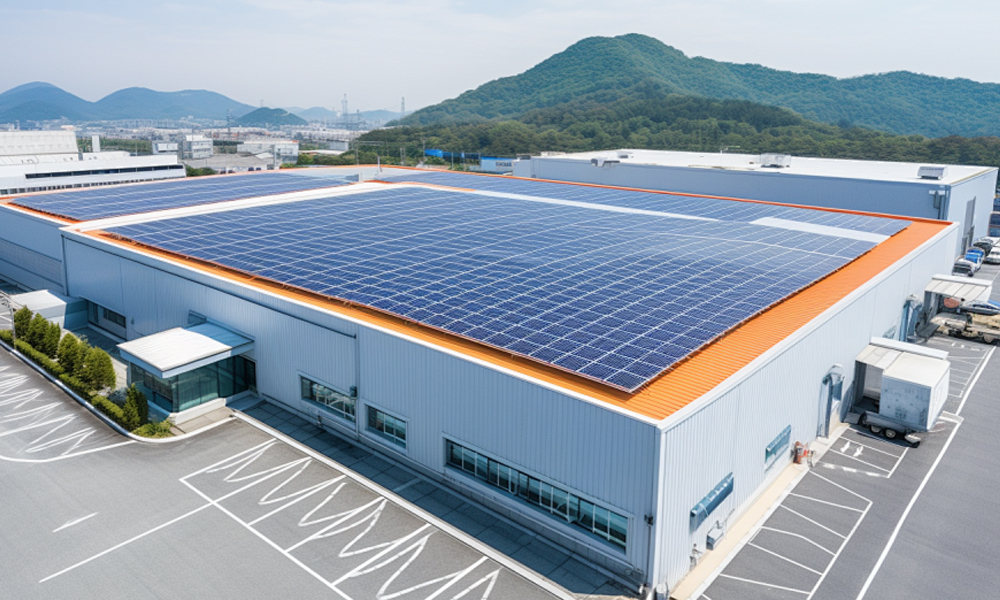
With 15 years of experience in the photovoltaic connector field, Meihua Electronics understands that metal terminals are the "heart" of photovoltaic connectors—their quality directly determines the current carrying stability, environmental tolerance, and safety redundancy of a power plant over its 25-year lifespan. The following systematically breaks down the selection logic and industry standards for high-quality photovoltaic metal terminals from five key dimensions: core materials, copper sheet thickness, overload current, salt spray duration, and certification compliance.
I. Core Materials: High conductivity + strong elasticity + fatigue resistance, rejecting "recycled copper"
Photovoltaic terminals need to withstand high DC currents for extended periods, and are subject to outdoor temperature variations (-40℃ to +90℃) and frequent vibrations; therefore, the material is fundamental to their performance.
Optimal Substrate: T2 Copper (Cu≥99.95%)
T2 Copper: Conductivity ≥98% IACS, low temperature rise, low loss, suitable for high current carrying requirements (e.g., 30A/55A terminals).
Prohibited Materials: Brass (copper-zinc alloy, conductivity only 20%-30%, prone to overheating), recycled copper (high impurities, high risk of brittleness), ordinary stainless steel (conductivity almost 0, only used for structural components).
Meihua Material Selection Standards: 100% virgin T2 copper material reports are traceable, eliminating the mixing of recycled materials.
II. Copper sheet thickness: determines current carrying capacity and mechanical strength; "the thicker the better," but it must be matched with the design.
The thickness of the copper sheet directly affects the current-carrying cross-sectional area (resistance), mechanical strength (deformation resistance), and heat dissipation efficiency (temperature rise), making it a core quantitative indicator for selection.
1. Industry Standards and Mainstream Specifications (Photovoltaic 1000V/1500V Connectors)
Standard Current (≤30A): Copper sheet thickness 0.3mm~0.4mm, compatible with 2.5/4/6mm² cables, meeting basic current carrying capacity and insertion/removal strength requirements.
Medium-High Current (30A~55A, mainstream high-power modules): Copper sheet thickness 0.5mm~0.6mm, compatible with 2.5/4/6mm² cables, current-carrying cross-sectional area ≥2.5mm², controlling temperature rise ≤30K (ambient 85℃).
High Current Energy Storage/Combiner Box (≥55A): Copper sheet thickness 1.0mm~1.5mm, employing a "thickened copper + multiple parallel" design to avoid single-point overheating.
2. Fatal Risks of Insufficient Thickness
Soaring Resistance: Halving the thickness → Doubling the resistance → 4 times more heat generation at the same current. Prolonged high temperatures lead to plating peeling, copper oxidation, and a vicious cycle of poor contact resistance, ultimately resulting in thermal failure or even fire (23% of electrical fires originate from poor terminal contact).
Mechanical Failure: Thin copper sheets (<0.3mm) are prone to deformation and springback failure during insertion and removal. Under vibration environments (such as wind vibration, thermal expansion and contraction), the contact gap widens, exacerbating poor connections.
3. Meihua Thickness Control Standards
30A Terminal: Copper sheet thickness ≥0.4mm. Meihua TUV connector standard (customizable according to customer needs).
55A Terminal: Copper sheet thickness ≥0.5mm. Meihua UL connector standard (customizable according to customer needs).
III. Overload Current: Rated + Peak + Derating, Triple Protection to Prevent Thermal Runaway
光伏系统存在 组件反向电流、云层遮挡电流波动、夜间漏电流 等工况,端子需具备 “额定稳定 + 短时抗过载” 能力,核心看 3 个指标:
-
额定电流(持续安全电流)
- 定义:环境温度 85℃下,长期通流 温升≤30℃ 的最大电流(IEC 62852)。
- 主流规格: 30A/55A (1500V DC),适配 210mm/182mm 高功率组件(Isc≈13A~18A,组串后总电流≤55A)。
- 选型原则: 端子额定电流≥1.25 倍组件短路电流(Isc) ,预留长期老化冗余。
- 峰值过载电流(短时耐受)
- 定义:10 秒~1 分钟内可承受的最大电流, 温升≤45℃ ,无永久变形、镀层不脱落。
- 行业要求:41A 端子 峰值≥55A(10 秒) ,55A 端子 峰值≥70A(10 秒) ,覆盖组件反向电流冲击。
- 降额曲线(高温环境修正)
- 环境温度>85℃时,允许电流需 降额使用 :
表格
|
环境温度(℃) |
25 |
50 |
70 |
85 |
100 |
|
允许电流占比 |
100% |
80% |
60% |
50% |
30% |
- 美桦过载能力实测
- 41A 端子:持续 41A(85℃)温升 22K;短时 55A(10 秒)温升 38K,无异常。
- 55A 端子:持续 55A(85℃)温升 25K;短时 70A(10 秒)温升 42K,安全冗余充足。
IV. Salt spray duration: 25 years of outdoor corrosion resistance; salt spray is the "litmus test" for lifespan.
Photovoltaic power plants are mostly built in coastal areas (salt spray), deserts (dust + temperature difference), and industrial areas (acid and alkali corrosion). The corrosion resistance of the terminal plating directly determines the connector's lifespan. The key factors are the salt spray test duration, plating material, and plating thickness.
1. Industry Salt Spray Test Standards (IEC 62852/GB/T 10125)
Test conditions: 5% NaCl solution, 35℃, continuous spraying. Evaluation criteria: no red rust on the plating, contact resistance change ≤10%.
Basic threshold: 24 hours
Outdoor standard: 48 hours
Tin plating (mainstream):
Thickness: ≥5μm (ordinary) / ≥8μm (high-end). Thin plating (<3μm) will show red rust after 24 hours.
Advantages: Low cost, easy soldering, good conductivity; Disadvantages: High porosity, long-term salt spray easily penetrates and corrodes the substrate.
Silver plating (low contact resistance):
Thickness: ≥1μm, contact resistance <0.3mΩ, strong oxidation resistance, suitable for high current/high frequency scenarios (such as energy storage connectors). Advantages: good conductivity, strong salt spray resistance, oxidation resistance; Disadvantages: high cost, requires anti-sulfurization.
Consequences of salt spray failure
Plating corrosion → substrate rusting → contact resistance surge (>5mΩ) → increased heating → plating peeling → vicious cycle, failure in 3~5 years, far below the 25-year design life of photovoltaics.
4. Meihua Salt Spray and Plating Standards
All terminals: Tin plating ≥8μm, no red rust after ≥48 hours of neutral salt spray.
V. Certification Compliance: International + Domestic Dual Certifications to Mitigate Quality Risks
High-quality terminals must pass mandatory certifications in the photovoltaic industry to ensure performance and safety:
International Certifications: TUV IEC 62852, UL 6703 (covering all electrical, mechanical, salt spray, and temperature rise tests).
Meihua Certification: All hardware terminals are dual certified by TUV and UL, with complete and traceable test reports.
Meihua Selection Summary: Quickly Identify High-Quality Terminals in 10 Seconds
1. Material: T2 copper, free of impurities and recycled materials;
2. Thickness: 30A ≥ 0.4mm, 55A ≥ 0.5mm, thicker is more stable;
3. Overload: Rated ≥ 41A, peak ≥ 55A, 85℃ temperature rise ≤ 30K;
4. Salt Spray: ≥ 48 hours without red rust or black spots, tin plating ≥ 8μm;
5. Certifications: Complete TUV/UL/CQC certifications, reports are traceable.
With 15 years of experience in photovoltaic connectors, Meihua Electronics has always adhered to the philosophy of "terminal quality first, 25-year life guarantee". From material selection to process control, from testing and verification to mass production, the entire process is strictly controlled to provide highly reliable connector solutions for photovoltaic power plants around the world.
 telephone
 Contact US